Governance

FSI's research on the origins, character and consequences of government institutions spans continents and academic disciplines. The institute’s senior fellows and their colleagues across Stanford examine the principles of public administration and implementation. Their work focuses on how maternal health care is delivered in rural China, how public action can create wealth and eliminate poverty, and why U.S. immigration reform keeps stalling. 

FSI’s work includes comparative studies of how institutions help resolve policy and societal issues. Scholars aim to clearly define and make sense of the rule of law, examining how it is invoked and applied around the world. 

FSI researchers also investigate government services – trying to understand and measure how they work, whom they serve and how good they are. They assess energy services aimed at helping the poorest people around the world and explore public opinion on torture policies. The Children in Crisis project addresses how child health interventions interact with political reform. Specific research on governance, organizations and security capitalizes on FSI's longstanding interests and looks at how governance and organizational issues affect a nation’s ability to address security and international cooperation.

Authors
News Type
News
Date
Paragraphs

On October 21, 2025, Ms. Sanae Takaichi, a hardline conservative, became the first female Prime Minister of Japan, marking a historic moment for the country, which has one of the worst records among the world's developed democracies for gender equality. Yet, Takaichi's views on empowering women are complex, and she steps into office at a moment of internal party weakness and intense domestic and regional strategic pressures. On October 28, she will welcome President Trump to Tokyo, where the two leaders will hold a summit meeting.

In the following video explainer, Stanford sociologist Kiyoteru Tsutsui, the Henri H. and Tomoye Takahashi Professor and Senior Fellow in Japanese Studies at the Shorenstein Asia-Pacific Research Center (APARC) and the director of APARC and its Japan Program, discusses Takaichi’s background and rise to power, her cabinet choices, and what they signal for Japan's future. Watch:

Video: Michael Breger


Subscribe to APARC newsletters to receive our experts' analysis and commentary >


In the Media


On October 28, 2025, on the heels of the summit meeting of Prime Minister Takaichi and President Trump, Tsutsui joined Scott Tong, host of WBUR's Here & Now, to discuss Takaichi's rise to power and what's next for Japan. Listen:

Read More

Hero Image
Prime Minister Takaichi speaks in front of reporters during her first press conference as prime minister at the Prime Minister's Residence on 21 October 2025.
Takaichi speaks in front of reporters during her first press conference as prime minister at the Prime Minister's Residence on October 21, 2025.
Cabinet Secretariat, CC BY 4.0, via Wikimedia Commons
All News button
1
Subtitle

Stanford sociologist Kiyoteru Tsutsui, director of the Shorenstein Asia-Pacific Research Center and the Japan Program, explains the path to power of Japan’s first female prime minister and what her leadership means for the country's future.
Date Label
-

For Fall Quarter 2021, FSI will be hosting hybrid events. Many events will be open to the public online via Zoom, and limited-capacity in-person attendance for Stanford affiliates may be available in accordance with Stanford’s health and safety guidelines.

Register for Zoom
(Open to the public)
Register for In-person
(Stanford affiliates only)

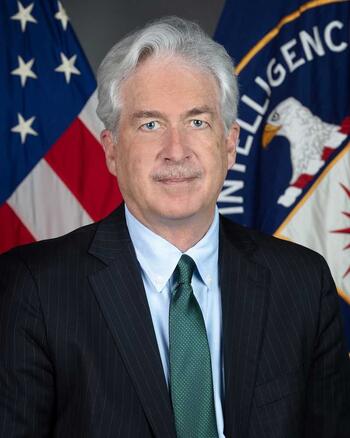
The Freeman Spogli Institute for International Studies (FSI) is honored to host the Director of the Central Intelligence Agency, William J. Burns, for a discussion on the national security challenges and opportunities facing the United States, and his experiences and lessons learned during his career in the Foreign Service. FSI Director Michael McFaul will moderate the discussion and questions from the audience.

Image
William Burns, Director of the CIA

Director Burns was officially sworn in as C.I.A. Director on March 19, 2021, making him the first career diplomat to serve as Director. Director Burns holds the highest rank in the Foreign Service—Career Ambassador—and is only the second serving career diplomat in history to become Deputy Secretary of State.

Director Burns retired from the State Department U.S. Foreign Service in 2014 before becoming president of the Carnegie Endowment for International Peace.

Director Burns is a crisis-tested public servant who spent his 33-year diplomatic career working to keep Americans safe and secure. Prior to his tenure as Deputy Secretary of State, he served as Under Secretary of State for Political Affairs from 2008 to 2011; U.S. Ambassador to Russia from 2005 to 2008; Assistant Secretary of State for Near Eastern Affairs from 2001 to 2005; and U.S. Ambassador to Jordan from 1998 to 2001. He was also Executive Secretary of the State Department and Special Assistant to former Secretaries of State Warren Christopher and Madeleine Albright; Minister-Counselor for Political Affairs at the U.S. Embassy in Moscow; Acting Director and Principal Deputy Director of the State Department’s Policy Planning Staff; and Special Assistant to the President and Senior Director for Near East and South Asian Affairs at the National Security Council.

Director Burns received three Presidential Distinguished Service Awards and the highest civilian honors from the Pentagon and the U.S. Intelligence Community. He is the author of the best-selling book, The Back Channel: A Memoir of American Diplomacy and the Case for Its Renewal (2019). He earned a bachelor’s degree in history from LaSalle University and master’s and doctoral degrees in international relations from Oxford University, where he studied as a Marshall Scholar.

William Burns | Director of the CIA
Lectures
-

For Fall Quarter 2021, FSI will be hosting hybrid events. Many events will be open to the public online via Zoom, and limited-capacity in-person attendance for Stanford affiliates may be available in accordance with Stanford’s health and safety guidelines.

                                                Register for Zoom                                                         Register for In-Person
                                                           (Open to all)                                                                    (Stanford affiliates only)              


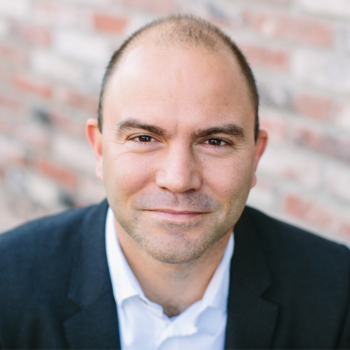
Why is democracy so threatened in America and around the world? And what can we do about it? Join Ben Rhodes to explore the answers to these questions and discuss his recent book, After the Fall.

Image
Ben Rhodes

In 2017, as Ben Rhodes was helping Barack Obama begin his next chapter, the legacy they had worked to build for eight years was being taken apart. To understand what was happening in America, Rhodes decided to look outward. Over the next three years, he traveled to dozens of countries, meeting with politicians, activists, and dissidents confronting the same nationalism and authoritarianism that was tearing America apart. Part memoir and part reportage, After the Fall investigates how much America’s fingerprints are on a world we helped to shape, through our post–Cold War embrace of unbridled capitalism and our post-9/11 nationalism and militarism; our mania for technology and social media; and the racism that fueled the backlash to America’s first Black president. At the same time, Rhodes learns from stories of a diverse set of characters—from Barack Obama himself to Cuban rebels to a rising generation of international leaders—that looking squarely at where America has gone wrong makes clear how essential it is to fight for what America is supposed to be, for our own country and the entire world.

Ben Rhodes is a writer, political commentator, and national security analyst. He is currently a contributor for NBC News and MSNBC; co-host of Pod Save the World; a senior advisor to former President Barack Obama; and chair of National Security Action, which he co-founded with Jake Sullivan in 2018. From 2009-2017, Ben served as a Deputy National Security Advisor to President Obama. In that capacity, he participated in all of President Obama’s key decisions, and oversaw the President’s national security communications, speechwriting, and public diplomacy.

Writer, political commentator, and national security analyst
Ben Rhodes | Writer, political commentator, and national security analyst
Seminars
Authors
News Type
News
Date
Paragraphs

On August 9, 2020 citizens in the Republic of Belarus went to the polls to vote for their next president. The incumbent was Alexander Lukashenko, a 67-year-old military officer who has kept an iron grip on the presidency for the entire 26 years Bealrus has held elections. But the challenger was an unexpected, new face. Sviatlana Tsikhanouskaya is a 38-year-old English teacher, mother and pro-democracy activist who stepped into a campaign following her husband's arrest and imprisonment in May 2020 for political dissension. In four short months, she galvanized the nation with a message of democracy, freedom and fair elections that reached across opposition factions and gained enough momentum to become a serious contender for the presidency.

On election day, projections estimated an initial win for Tsikhanouskaya at 60%. But when the country's Central Elections Commission announced the election results, Lukashenko carried 80% of the vote, and Tsikhanouskaya a mere 10%. Given the long history of election engineering in Belarus, the results were expected. But what happened next was not. Outraged by the fraud, Tsikhanouskaya's supporters poured into city centers in Brest and Minsk by the tens of thousands, instigating the largest public protests in the history of post-Soviet Belarus. Caught off-guard, the regime hit back with a ruthless wave of violence and political imprisonments, prompting the European Union, NATO and other countries to impose sanctions and condemn Lukashenko as an illegitimate leader.

While Tsikhanouskaya's presidential campaign ended last August, her role as a democratic leader in Eastern Europe has not. In the year since the election, she has traveled the globe to meet with lawmakers, policy experts and heads of state to speak out against the ongoing repression of Lukashenko's regime and advocate for support of Belarus by the international community. The Freeman Spogli Institute for International Studies (FSI) was honored to host Tsikhanouskaya and her delegation at Stanford for a roundtable discussion on the challenges that lay ahead in preparing Belarus for a democratic transition. Director Michael McFaul hosted the discussion, which brought together scholars from across FSI, the Hoover Institute and the Belarusian expatriate community. The full recording is below.

Rather than holding a typical press conference, Tsikhanouskaya's visit at FSI gave members of the Belarusian delegation an opportunity to engage in back-and-forth dialogue with an interdisciplinary panel of experts on governance, history and policy. Tsikhanouskaya and her senior advisors shared their perspectives on the challenges they are facing to build and maintain pro-democracy efforts, while Stanford scholars offered insights from their extensive research and scholarship.

Presidents, Protests and Precedent in Belarus


As leader of the delegation, Sviatlana Tsikhanouskaya gave an overview of the brutality of Lukashenko's regime and the lawlessness that has enveloped the country. But she also reaffirmed the commitment of everyday Belarusians to defending their independence and continuing the work of building new systems to push back against the dictatorship, and encouraged the support of the international democratic community.

"Belarusians are doing their homework. But we also understand that we need the assistance and help of other democratic countries," said Tsikhanouskaya. "That support is vital, because our struggle relates not just to Belarusians, but to all countries who share these common values."

Speaking to the work that Belarusians have already undertaken, Franak Viačorka, a senior advisor to Sviatlana Tsikhanouskaya, described how citizens are creating new means of protesting and organizing. Though they learned some tactics from recent protests in Hong Kong and classic theories by political scientists like Gene Sharp, organizers in Belarus quickly realized that they needed to innovate in order to keep ahead of Lukashenko's crack-downs. Today the opposition is a tech-driven movement that spreads awareness and support quickly through digital spaces and underground channels while avoiding large in-person gatherings that attract government brutality.

By Tanya Bayeva's assessment, these methods of organizing have been effective in capturing widespread support amongst people. A member of the Belarusian diaspora, Bayeva described the sense of empowerment she felt in coming together in a common cause with like-minded people.

"By coming out like this, people have started realizing that it is up to us, the people, and our individual willpower to make a difference," said Bayeva. "We are realizing that the king has no clothes, and that working together we can forward the process of democratization."

But there is still plenty of work ahead. In order to facilitate a more peaceful future transition to a democratic system, there will need to be frameworks in place to bridge the divide between old systems and new. Valery Kavaleuski, the representative on foreign affairs in Sviatlana Tsikhanouskaya's delegation, is focusing extensively on these issues, such as reconciliation processes and plans for future investments between Belarus and the European Union.

"These are political moves that reinforce hope among Belarusians and tells that that they are not alone and that when the change comes, they will have friends by their side to overcome the challenges of the transition period," said Kavaleuski.

Advice from Stanford Scholars: Focus on Processes and People


Responding to the Belarusian delegation's questions and comments, the faculty from FSI and the broader Stanford community offered insights and considerations from a variety of perspectives and disciplines on 'next steps' for the pro-democracy movement.

Francis Fukuyama, the Olivier Nomellini Senior Fellow at FSI and Mosbacher Director at the Center on Democracy, Development and the Rule of Law (CDDRL), cautioned against the impulse to immediately take down the state and bureaucratic systems of the existing regime. While dismantling the mechanisms from the old state may feel emotionally satisfying, examples from history such as post-Nazi Germany and post-invasion Iraq illustrate the crippling effect on efficiency, functionality and the ability of the new order to govern in a vacuum of bureaucratic expertise.

FSI's Deputy Director, Kathryn Stoner, gave similar advice in regard to drafting and implementing a new constitution and conventions.

"People care to a great degree [about a new constitution], but not to months and months of debate and politicians yelling at one another. People can't eat constitutions," said Stoner. "You have to demonstrate that your system is going to be better than what was. When things have not gone well in transitioning countries, it's been because people don't see concrete change. So have a constitutional convention, but make it fast."

Amr Hamzawy, a senior research scholar for the Middle East Initiative at the Center for Democracy, Development and the Rule of Law, also pointed to the importance of engaging the public and building alliances within both the old and new political systems. Based on his observations of the failed Egyptian and Tunisian efforts at democratic transition, he cautioned against discussions of impunity, arguing that while politically and morally symbolic, this practice often backfires and alienates important factions of the state apparatus which are vital for the function and success of a new government.

Hamzawy similarly encouraged carefully blending nationalism and populism to keep divisions within the public sector in check. Imbuing such narratives with pro-democracy rhetoric, he believes, can create a powerful tool for unifying the population around the new government and emerging national identity.  

The advice from the Europe Center's director, Anna Grzymala-Busse, succinctly brought together many of the points made by the faculty panel: "No post-transitional government can achieve all the promises they've made right away," said Grzymala-Busse. "So make the transition about processes rather than specific outcomes, about ensuring the losers are heard along with the winners, and about making sure all people can participate."

Additional participants in the roundtable discussion not noted above include Hanna Liubakova, a journalist and non-resident fellow at the Atlantic Council, Dmytro Kushneruk, the Consul General of Ukraine in San Francisco, and Stanford scholars Larry Diamond, David Holloway, Norman Naimark, Erik Jensen, Kiyoteru Tsutsui and John Dunlop.

Read More

Hero Image
Sviatlana Tsikhanouskaya discusses the future of democracy in Belarus with a roundtable of Stanford scholars.
Sviatlana Tsikhanouskaya, Michael McFaul, Franak Viačorka, and Francis Fukuyama participate in a roundtable discussion on democracy in Belarus.
Office of Sviatlana Tsikhanouskaya
All News button
1
Subtitle

Democratic leader Sviatlana Tsikhanouskaya and her delegation joined an interdisciplinary panel of Stanford scholars and members of the Belarusian community to discuss the future of democracy in Belarus.

-

Each year up to 100 high-achieving students with demonstrated intellect, leadership potential and civic commitment will receive full funding to pursue a graduate education at Stanford. Join us to learn more about the Knight-Hennessy Scholars Program. 

                                      Registration报名

https://apply.knight-hennessy.stanford.edu/register/PKU 


Knight-Hennessy Info Session Flyer
Download pdf
John Hennessy Knight-Hennessy Scholars
Seminars
Subscribe to Governance