International Relations

FSI researchers strive to understand how countries relate to one another, and what policies are needed to achieve global stability and prosperity. International relations experts focus on the challenging U.S.-Russian relationship, the alliance between the U.S. and Japan and the limitations of America’s counterinsurgency strategy in Afghanistan.

Foreign aid is also examined by scholars trying to understand whether money earmarked for health improvements reaches those who need it most. And FSI’s Walter H. Shorenstein Asia-Pacific Research Center has published on the need for strong South Korean leadership in dealing with its northern neighbor.

FSI researchers also look at the citizens who drive international relations, studying the effects of migration and how borders shape people’s lives. Meanwhile FSI students are very much involved in this area, working with the United Nations in Ethiopia to rethink refugee communities.

Trade is also a key component of international relations, with FSI approaching the topic from a slew of angles and states. The economy of trade is rife for study, with an APARC event on the implications of more open trade policies in Japan, and FSI researchers making sense of who would benefit from a free trade zone between the European Union and the United States.

-

For Fall Quarter 2021, FSI will be hosting hybrid events. Many events will be open to the public online via Zoom, and limited-capacity in-person attendance for Stanford affiliates may be available in accordance with Stanford’s health and safety guidelines.

                                                Register for Zoom                                                         Register for In-Person
                                                           (Open to all)                                                                    (Stanford affiliates only)              


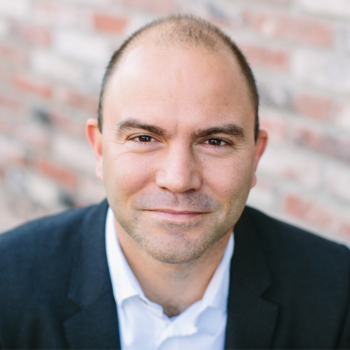
Why is democracy so threatened in America and around the world? And what can we do about it? Join Ben Rhodes to explore the answers to these questions and discuss his recent book, After the Fall.

Image
Ben Rhodes

In 2017, as Ben Rhodes was helping Barack Obama begin his next chapter, the legacy they had worked to build for eight years was being taken apart. To understand what was happening in America, Rhodes decided to look outward. Over the next three years, he traveled to dozens of countries, meeting with politicians, activists, and dissidents confronting the same nationalism and authoritarianism that was tearing America apart. Part memoir and part reportage, After the Fall investigates how much America’s fingerprints are on a world we helped to shape, through our post–Cold War embrace of unbridled capitalism and our post-9/11 nationalism and militarism; our mania for technology and social media; and the racism that fueled the backlash to America’s first Black president. At the same time, Rhodes learns from stories of a diverse set of characters—from Barack Obama himself to Cuban rebels to a rising generation of international leaders—that looking squarely at where America has gone wrong makes clear how essential it is to fight for what America is supposed to be, for our own country and the entire world.

Ben Rhodes is a writer, political commentator, and national security analyst. He is currently a contributor for NBC News and MSNBC; co-host of Pod Save the World; a senior advisor to former President Barack Obama; and chair of National Security Action, which he co-founded with Jake Sullivan in 2018. From 2009-2017, Ben served as a Deputy National Security Advisor to President Obama. In that capacity, he participated in all of President Obama’s key decisions, and oversaw the President’s national security communications, speechwriting, and public diplomacy.

Writer, political commentator, and national security analyst
Ben Rhodes | Writer, political commentator, and national security analyst
Seminars
Authors
News Type
News
Date
Paragraphs

On August 9, 2020 citizens in the Republic of Belarus went to the polls to vote for their next president. The incumbent was Alexander Lukashenko, a 67-year-old military officer who has kept an iron grip on the presidency for the entire 26 years Bealrus has held elections. But the challenger was an unexpected, new face. Sviatlana Tsikhanouskaya is a 38-year-old English teacher, mother and pro-democracy activist who stepped into a campaign following her husband's arrest and imprisonment in May 2020 for political dissension. In four short months, she galvanized the nation with a message of democracy, freedom and fair elections that reached across opposition factions and gained enough momentum to become a serious contender for the presidency.

On election day, projections estimated an initial win for Tsikhanouskaya at 60%. But when the country's Central Elections Commission announced the election results, Lukashenko carried 80% of the vote, and Tsikhanouskaya a mere 10%. Given the long history of election engineering in Belarus, the results were expected. But what happened next was not. Outraged by the fraud, Tsikhanouskaya's supporters poured into city centers in Brest and Minsk by the tens of thousands, instigating the largest public protests in the history of post-Soviet Belarus. Caught off-guard, the regime hit back with a ruthless wave of violence and political imprisonments, prompting the European Union, NATO and other countries to impose sanctions and condemn Lukashenko as an illegitimate leader.

While Tsikhanouskaya's presidential campaign ended last August, her role as a democratic leader in Eastern Europe has not. In the year since the election, she has traveled the globe to meet with lawmakers, policy experts and heads of state to speak out against the ongoing repression of Lukashenko's regime and advocate for support of Belarus by the international community. The Freeman Spogli Institute for International Studies (FSI) was honored to host Tsikhanouskaya and her delegation at Stanford for a roundtable discussion on the challenges that lay ahead in preparing Belarus for a democratic transition. Director Michael McFaul hosted the discussion, which brought together scholars from across FSI, the Hoover Institute and the Belarusian expatriate community. The full recording is below.

Rather than holding a typical press conference, Tsikhanouskaya's visit at FSI gave members of the Belarusian delegation an opportunity to engage in back-and-forth dialogue with an interdisciplinary panel of experts on governance, history and policy. Tsikhanouskaya and her senior advisors shared their perspectives on the challenges they are facing to build and maintain pro-democracy efforts, while Stanford scholars offered insights from their extensive research and scholarship.

Presidents, Protests and Precedent in Belarus


As leader of the delegation, Sviatlana Tsikhanouskaya gave an overview of the brutality of Lukashenko's regime and the lawlessness that has enveloped the country. But she also reaffirmed the commitment of everyday Belarusians to defending their independence and continuing the work of building new systems to push back against the dictatorship, and encouraged the support of the international democratic community.

"Belarusians are doing their homework. But we also understand that we need the assistance and help of other democratic countries," said Tsikhanouskaya. "That support is vital, because our struggle relates not just to Belarusians, but to all countries who share these common values."

Speaking to the work that Belarusians have already undertaken, Franak Viačorka, a senior advisor to Sviatlana Tsikhanouskaya, described how citizens are creating new means of protesting and organizing. Though they learned some tactics from recent protests in Hong Kong and classic theories by political scientists like Gene Sharp, organizers in Belarus quickly realized that they needed to innovate in order to keep ahead of Lukashenko's crack-downs. Today the opposition is a tech-driven movement that spreads awareness and support quickly through digital spaces and underground channels while avoiding large in-person gatherings that attract government brutality.

By Tanya Bayeva's assessment, these methods of organizing have been effective in capturing widespread support amongst people. A member of the Belarusian diaspora, Bayeva described the sense of empowerment she felt in coming together in a common cause with like-minded people.

"By coming out like this, people have started realizing that it is up to us, the people, and our individual willpower to make a difference," said Bayeva. "We are realizing that the king has no clothes, and that working together we can forward the process of democratization."

But there is still plenty of work ahead. In order to facilitate a more peaceful future transition to a democratic system, there will need to be frameworks in place to bridge the divide between old systems and new. Valery Kavaleuski, the representative on foreign affairs in Sviatlana Tsikhanouskaya's delegation, is focusing extensively on these issues, such as reconciliation processes and plans for future investments between Belarus and the European Union.

"These are political moves that reinforce hope among Belarusians and tells that that they are not alone and that when the change comes, they will have friends by their side to overcome the challenges of the transition period," said Kavaleuski.

Advice from Stanford Scholars: Focus on Processes and People


Responding to the Belarusian delegation's questions and comments, the faculty from FSI and the broader Stanford community offered insights and considerations from a variety of perspectives and disciplines on 'next steps' for the pro-democracy movement.

Francis Fukuyama, the Olivier Nomellini Senior Fellow at FSI and Mosbacher Director at the Center on Democracy, Development and the Rule of Law (CDDRL), cautioned against the impulse to immediately take down the state and bureaucratic systems of the existing regime. While dismantling the mechanisms from the old state may feel emotionally satisfying, examples from history such as post-Nazi Germany and post-invasion Iraq illustrate the crippling effect on efficiency, functionality and the ability of the new order to govern in a vacuum of bureaucratic expertise.

FSI's Deputy Director, Kathryn Stoner, gave similar advice in regard to drafting and implementing a new constitution and conventions.

"People care to a great degree [about a new constitution], but not to months and months of debate and politicians yelling at one another. People can't eat constitutions," said Stoner. "You have to demonstrate that your system is going to be better than what was. When things have not gone well in transitioning countries, it's been because people don't see concrete change. So have a constitutional convention, but make it fast."

Amr Hamzawy, a senior research scholar for the Middle East Initiative at the Center for Democracy, Development and the Rule of Law, also pointed to the importance of engaging the public and building alliances within both the old and new political systems. Based on his observations of the failed Egyptian and Tunisian efforts at democratic transition, he cautioned against discussions of impunity, arguing that while politically and morally symbolic, this practice often backfires and alienates important factions of the state apparatus which are vital for the function and success of a new government.

Hamzawy similarly encouraged carefully blending nationalism and populism to keep divisions within the public sector in check. Imbuing such narratives with pro-democracy rhetoric, he believes, can create a powerful tool for unifying the population around the new government and emerging national identity.  

The advice from the Europe Center's director, Anna Grzymala-Busse, succinctly brought together many of the points made by the faculty panel: "No post-transitional government can achieve all the promises they've made right away," said Grzymala-Busse. "So make the transition about processes rather than specific outcomes, about ensuring the losers are heard along with the winners, and about making sure all people can participate."

Additional participants in the roundtable discussion not noted above include Hanna Liubakova, a journalist and non-resident fellow at the Atlantic Council, Dmytro Kushneruk, the Consul General of Ukraine in San Francisco, and Stanford scholars Larry Diamond, David Holloway, Norman Naimark, Erik Jensen, Kiyoteru Tsutsui and John Dunlop.

Read More

Hero Image
Sviatlana Tsikhanouskaya discusses the future of democracy in Belarus with a roundtable of Stanford scholars.
Sviatlana Tsikhanouskaya, Michael McFaul, Franak Viačorka, and Francis Fukuyama participate in a roundtable discussion on democracy in Belarus.
Office of Sviatlana Tsikhanouskaya
All News button
1
Subtitle

Democratic leader Sviatlana Tsikhanouskaya and her delegation joined an interdisciplinary panel of Stanford scholars and members of the Belarusian community to discuss the future of democracy in Belarus.

-

Panel discussion with Stanford international affairs experts on escalating U.S.-Iran tensions.


Register: Click here to RSVP


Livestream: Please click here to join the livestream.


About this Event: U.S.-Iran tensions are at a new high following the U.S. drone strike that killed Iranian Major General Qassem Soleimani. Both sides continue to exchange threats of violence, and the implications for Iran’s nuclear ambitions, the fight against ISIS, and the U.S. presence in Iraq are expected to be profound. Join us for a panel discussion with Lisa Blaydes, Colin Kahl, Brett McGurk and Abbas Milani, moderated by Michael McFaul, on how recent developments may reshape the geopolitical landscape in one of the most volatile regions of the world.


This event is co-sponsored with Hamid and Christina Moghadam Program in Iranian Studies, Freeman Spogli Institute for International Studies, and the Middle East Initiative at the Center for International Security and Cooperation.


Speaker's Biographies:

Lisa Blaydes is a Professor of Political Science at Stanford University and a Senior Fellow at the Freeman Spogli Institute for International Studies. She is the author of Elections and Distributive Politics in Mubarak’s Egypt (Cambridge University Press, 2011). Her articles have appeared in the American Political Science ReviewInternational Studies QuarterlyInternational OrganizationJournal of Theoretical PoliticsMiddle East Journal, and World Politics. She holds degrees in Political Science (PhD) from the University of California, Los Angeles and International Relations (BA, MA) from Johns Hopkins University.


Colin Kahl is co-director of the Center for International Security and Cooperation, the inaugural Steven C. Házy Senior Fellow at the Freeman Spogli Institute for International Studies, and a Professor, by courtesy, in the Department of Political Science at Stanford University. He is also a Strategic Consultant to the Penn Biden Center for Diplomacy and Global Engagement.

From October 2014 to January 2017, he was Deputy Assistant to the President and National Security Advisor to the Vice President. In that position, he served as a senior advisor to President Obama and Vice President Biden on all matters related to U.S. foreign policy and national security affairs, and represented the Office of the Vice President as a standing member of the National Security Council Deputies’ Committee. From February 2009 to December 2011, Dr. Kahl was the Deputy Assistant Secretary of Defense for the Middle East at the Pentagon. In this capacity, he served as the senior policy advisor to the Secretary of Defense for Egypt, Iran, Iraq, Israel and the Palestinian territories, Saudi Arabia, Syria, Yemen, and six other countries in the Levant and Persian Gulf region. In June 2011, he was awarded the Secretary of Defense Medal for Outstanding Public Service by Secretary Robert Gates. 

From 2007 to 2017 (when not serving in the U.S. government), Dr. Kahl was an assistant and associate professor in the Security Studies Program at Georgetown University's Edmund A. Walsh School of Foreign Service. From 2007 to 2009 and 2012 to 2014, he was also a Senior Fellow at the Center for a New American Security (CNAS), a nonpartisan Washington, DC-based think tank. From 2000 to 2007, he was an assistant professor of political science at the University of Minnesota. In 2005-2006, Dr. Kahl took leave from the University of Minnesota to serve as a Council on Foreign Relations International Affairs Fellow in the Office of the Secretary of Defense, where he worked on issues related to counterinsurgency, counterterrorism, and responses to failed states. In 1997-1998, he was a National Security Fellow at the John M. Olin Institute for Strategic Studies at Harvard University.

Current research projects include a book analyzing American grand strategy in the Middle East in the post-9/11 era. A second research project focuses on the implications of emerging technologies on strategic stability.

He has published numerous articles on international security and U.S. foreign and defense policy in Foreign Affairs, Foreign Policy, International Security, the Los Angeles Times, Middle East Policy, the National Interest, the New Republic, the New York Times, Politico, the Washington Post, and the Washington Quarterly, as well as several reports for CNAS.

His previous research analyzed the causes and consequences of violent civil and ethnic conflict in developing countries, focusing particular attention on the demographic and natural resource dimensions of these conflicts. His book on the subject, States, Scarcity, and Civil Strife in the Developing World, was published by Princeton University Press in 2006, and related articles and chapters have appeared in International Security, the Journal of International Affairs, and various edited volumes.

Dr. Kahl received his B.A. in political science from the University of Michigan (1993) and his Ph.D. in political science from Columbia University (2000).


Brett McGurk is the Frank E. and Arthur W. Payne Distinguished Lecturer at the Freeman Spogli Institute and Center for Security and Cooperation at Stanford University.

McGurk’s research interests center on national security strategy, diplomacy, and decision-making in wartime.  He is particularly interested in the lessons learned over the presidencies of George W. Bush, Barack Obama, and Donald Trump regarding the importance of process in informing presidential decisions and the alignment of ends and means in national security doctrine and strategy.  At Stanford, he will be working on a book project incorporating these themes and teaching a graduate level seminar on presidential decision-making beginning in the fall of 2019.  He is also a frequent commentator on national security events in leading publications and as an NBC News Senior Foreign Affairs Analyst. 

Before coming to Stanford, McGurk served as Special Presidential Envoy for the Global Coalition to Defeat ISIS at the U.S. Department of State, helping to build and then lead the coalition of seventy-five countries and four international organizations in the global campaign against the ISIS terrorist network.  McGurk was also responsible for coordinating all aspects of U.S. policy in the campaign against ISIS in Iraq, Syria, and globally.

McGurk previously served in senior positions in the George W. Bush and Barack Obama administrations, including as Special Assistant to President Bush and Senior Director for Iraq and Afghanistan, and then as Deputy Assistant Secretary of State for Iraq and Iran and Special Presidential Envoy for the U.S. campaign against the Islamic State under Obama.

McGurk has led some of the most sensitive diplomatic missions in the Middle East over the last decade. His most recent assignment established one of the largest coalitions in history to prosecute the counter-ISIS campaign. He was a frequent visitor to the battlefields in both Iraq and Syria to help integrate military and civilian components of the war plan. He also led talks with Russia over the Syria conflict under both the Trump and Obama administrations, initiated back-channel diplomacy to reopen ties between Iraq and Saudi Arabia, and facilitated the formation of the last two Iraqi governments following contested elections in 2014 and 2018.

In 2015 and 2016, McGurk led fourteen months of secret negotiations with Iran to secure the release of Washington Post reporter Jason Rezain, U.S. Marine Amir Hekmati, and Pastor Saad Abadini, as well as three other American citizens.

During his time at the State Department, McGurk received multiple awards, including the Distinguished Honor Award and the Distinguished Service Award, the highest department awards for exceptional service in Washington and overseas assignments.

McGurk is also a nonresident senior fellow in the Middle East Program at the Carnegie Endowment for International Peace.

McGurk received his JD from Columbia University and his BA from the University of Connecticut Honors Program.  He served as a law clerk to Chief Justice William H. Rehnquist on the U.S. Supreme Court, Judge Denis Jacobs on the U.S. Court of Appeals for the 2d Circuit, and Judge Gerard E. Lynch on the U.S. District Court for the Southern District of New York.


Abbas Milani is the Hamid & Christina Moghadam Director of Iranian Studies at Stanford University and a Professor (by courtesy) in the Stanford Global Studies Division. He is also one of the founding co-directors of the Iran Democracy Project and a research fellow at the Hoover Institution. His expertise include U.S.-Iran relations as well as Iranian cultural, political, and security issues. Until 1986, he taught at Tehran University’s Faculty of Law and Political Science, where he was also a member of the Board of Directors of the university’s Center for International Relations. After moving to the United States, he was for fourteen years the Chair of the Political Science Department at the Notre Dame de Namur University. For eight years, he was a visiting Research Fellow in University of California, Berkeley’s Middle East Center.

Professor Milani came to Stanford ten years ago, when he became the founding director of the Iranian Studies Program. He also worked with two colleagues to launch the Iran Democracy Project at the Hoover Institution. He has published more than twenty books and two hundred articles and book reviews in scholarly magazines, journals, and newspapers. His latest book is a collection he co-edited with Larry Diamond, Politics & Culture in Contemporary Iran: Challenging the Status Quo  (Lynne Rienner Publishers, 2015).


Michael McFaul is the Ken Olivier and Angela Nomellini Professor of International Studies in Political Science, Director and Senior Fellow at the Freeman Spogli Institute for International Studies, and the Peter and Helen Bing Senior Fellow at the Hoover Institution, all at Stanford University. He was also the Distinguished Mingde Faculty Fellow at the Stanford Center at Peking University from June to August of 2015. He joined the Stanford faculty in 1995. He is also an analyst for NBC News and a contributing columnist to The Washington Post. McFaul served for five years in the Obama administration, first as Special Assistant to the President and Senior Director for Russian and Eurasian Affairs at the National Security Council at the White House (2009-2012), and then as U.S. Ambassador to the Russian Federation (2012-2014).

He has authored several books, most recently the New York Times bestseller,  “From Cold War to Hot Peace: An American Ambassador in Putin’s Russia.”  Earlier books include Advancing Democracy Abroad: Why We Should, How We Can; Transitions To Democracy: A Comparative Perspective  (eds. with Kathryn Stoner); Power and Purpose: American Policy toward Russia after the Cold War (with James Goldgeier); and Russia’s Unfinished Revolution: Political Change from Gorbachev to Putin. His current research interests include American foreign policy, great power relations between China, Russia, and the United States, and the relationship between democracy and development. 

Prof. McFaul was born and raised in Montana. He received his B.A. in International Relations and Slavic Languages and his M.A. in Soviet and East European Studies from Stanford University in 1986. As a Rhodes Scholar, he completed his D. Phil. in International Relations at Oxford University in 1991.

Abbas Milani
Seminars
-

Each year up to 100 high-achieving students with demonstrated intellect, leadership potential and civic commitment will receive full funding to pursue a graduate education at Stanford. Join us to learn more about the Knight-Hennessy Scholars Program. 

                                      Registration报名

https://apply.knight-hennessy.stanford.edu/register/PKU 


Knight-Hennessy Info Session Flyer
Download pdf
John Hennessy Knight-Hennessy Scholars
Seminars
Subscribe to International Relations