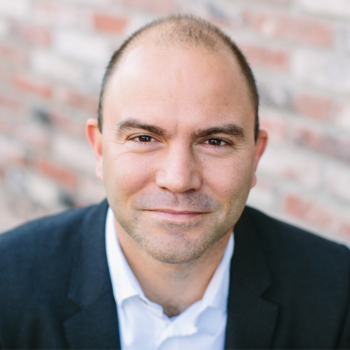
Panel discussion with Stanford international affairs experts on escalating U.S.-Iran tensions.
Register: Click here to RSVP
Livestream: Please click here to join the livestream.
About this Event: U.S.-Iran tensions are at a new high following the U.S. drone strike that killed Iranian Major General Qassem Soleimani. Both sides continue to exchange threats of violence, and the implications for Iran’s nuclear ambitions, the fight against ISIS, and the U.S. presence in Iraq are expected to be profound. Join us for a panel discussion with Lisa Blaydes, Colin Kahl, Brett McGurk and Abbas Milani, moderated by Michael McFaul, on how recent developments may reshape the geopolitical landscape in one of the most volatile regions of the world.
This event is co-sponsored with Hamid and Christina Moghadam Program in Iranian Studies, Freeman Spogli Institute for International Studies, and the Middle East Initiative at the Center for International Security and Cooperation.
Speaker's Biographies:
Lisa Blaydes is a Professor of Political Science at Stanford University and a Senior Fellow at the Freeman Spogli Institute for International Studies. She is the author of Elections and Distributive Politics in Mubarak’s Egypt (Cambridge University Press, 2011). Her articles have appeared in the American Political Science Review, International Studies Quarterly, International Organization, Journal of Theoretical Politics, Middle East Journal, and World Politics. She holds degrees in Political Science (PhD) from the University of California, Los Angeles and International Relations (BA, MA) from Johns Hopkins University.
Colin Kahl is co-director of the Center for International Security and Cooperation, the inaugural Steven C. Házy Senior Fellow at the Freeman Spogli Institute for International Studies, and a Professor, by courtesy, in the Department of Political Science at Stanford University. He is also a Strategic Consultant to the Penn Biden Center for Diplomacy and Global Engagement.
From October 2014 to January 2017, he was Deputy Assistant to the President and National Security Advisor to the Vice President. In that position, he served as a senior advisor to President Obama and Vice President Biden on all matters related to U.S. foreign policy and national security affairs, and represented the Office of the Vice President as a standing member of the National Security Council Deputies’ Committee. From February 2009 to December 2011, Dr. Kahl was the Deputy Assistant Secretary of Defense for the Middle East at the Pentagon. In this capacity, he served as the senior policy advisor to the Secretary of Defense for Egypt, Iran, Iraq, Israel and the Palestinian territories, Saudi Arabia, Syria, Yemen, and six other countries in the Levant and Persian Gulf region. In June 2011, he was awarded the Secretary of Defense Medal for Outstanding Public Service by Secretary Robert Gates.
From 2007 to 2017 (when not serving in the U.S. government), Dr. Kahl was an assistant and associate professor in the Security Studies Program at Georgetown University's Edmund A. Walsh School of Foreign Service. From 2007 to 2009 and 2012 to 2014, he was also a Senior Fellow at the Center for a New American Security (CNAS), a nonpartisan Washington, DC-based think tank. From 2000 to 2007, he was an assistant professor of political science at the University of Minnesota. In 2005-2006, Dr. Kahl took leave from the University of Minnesota to serve as a Council on Foreign Relations International Affairs Fellow in the Office of the Secretary of Defense, where he worked on issues related to counterinsurgency, counterterrorism, and responses to failed states. In 1997-1998, he was a National Security Fellow at the John M. Olin Institute for Strategic Studies at Harvard University.
Current research projects include a book analyzing American grand strategy in the Middle East in the post-9/11 era. A second research project focuses on the implications of emerging technologies on strategic stability.
He has published numerous articles on international security and U.S. foreign and defense policy in Foreign Affairs, Foreign Policy, International Security, the Los Angeles Times, Middle East Policy, the National Interest, the New Republic, the New York Times, Politico, the Washington Post, and the Washington Quarterly, as well as several reports for CNAS.
His previous research analyzed the causes and consequences of violent civil and ethnic conflict in developing countries, focusing particular attention on the demographic and natural resource dimensions of these conflicts. His book on the subject, States, Scarcity, and Civil Strife in the Developing World, was published by Princeton University Press in 2006, and related articles and chapters have appeared in International Security, the Journal of International Affairs, and various edited volumes.
Dr. Kahl received his B.A. in political science from the University of Michigan (1993) and his Ph.D. in political science from Columbia University (2000).
Brett McGurk is the Frank E. and Arthur W. Payne Distinguished Lecturer at the Freeman Spogli Institute and Center for Security and Cooperation at Stanford University.
McGurk’s research interests center on national security strategy, diplomacy, and decision-making in wartime. He is particularly interested in the lessons learned over the presidencies of George W. Bush, Barack Obama, and Donald Trump regarding the importance of process in informing presidential decisions and the alignment of ends and means in national security doctrine and strategy. At Stanford, he will be working on a book project incorporating these themes and teaching a graduate level seminar on presidential decision-making beginning in the fall of 2019. He is also a frequent commentator on national security events in leading publications and as an NBC News Senior Foreign Affairs Analyst.
Before coming to Stanford, McGurk served as Special Presidential Envoy for the Global Coalition to Defeat ISIS at the U.S. Department of State, helping to build and then lead the coalition of seventy-five countries and four international organizations in the global campaign against the ISIS terrorist network. McGurk was also responsible for coordinating all aspects of U.S. policy in the campaign against ISIS in Iraq, Syria, and globally.
McGurk previously served in senior positions in the George W. Bush and Barack Obama administrations, including as Special Assistant to President Bush and Senior Director for Iraq and Afghanistan, and then as Deputy Assistant Secretary of State for Iraq and Iran and Special Presidential Envoy for the U.S. campaign against the Islamic State under Obama.
McGurk has led some of the most sensitive diplomatic missions in the Middle East over the last decade. His most recent assignment established one of the largest coalitions in history to prosecute the counter-ISIS campaign. He was a frequent visitor to the battlefields in both Iraq and Syria to help integrate military and civilian components of the war plan. He also led talks with Russia over the Syria conflict under both the Trump and Obama administrations, initiated back-channel diplomacy to reopen ties between Iraq and Saudi Arabia, and facilitated the formation of the last two Iraqi governments following contested elections in 2014 and 2018.
In 2015 and 2016, McGurk led fourteen months of secret negotiations with Iran to secure the release of Washington Post reporter Jason Rezain, U.S. Marine Amir Hekmati, and Pastor Saad Abadini, as well as three other American citizens.
During his time at the State Department, McGurk received multiple awards, including the Distinguished Honor Award and the Distinguished Service Award, the highest department awards for exceptional service in Washington and overseas assignments.
McGurk is also a nonresident senior fellow in the Middle East Program at the Carnegie Endowment for International Peace.
McGurk received his JD from Columbia University and his BA from the University of Connecticut Honors Program. He served as a law clerk to Chief Justice William H. Rehnquist on the U.S. Supreme Court, Judge Denis Jacobs on the U.S. Court of Appeals for the 2d Circuit, and Judge Gerard E. Lynch on the U.S. District Court for the Southern District of New York.
Abbas Milani is the Hamid & Christina Moghadam Director of Iranian Studies at Stanford University and a Professor (by courtesy) in the Stanford Global Studies Division. He is also one of the founding co-directors of the Iran Democracy Project and a research fellow at the Hoover Institution. His expertise include U.S.-Iran relations as well as Iranian cultural, political, and security issues. Until 1986, he taught at Tehran University’s Faculty of Law and Political Science, where he was also a member of the Board of Directors of the university’s Center for International Relations. After moving to the United States, he was for fourteen years the Chair of the Political Science Department at the Notre Dame de Namur University. For eight years, he was a visiting Research Fellow in University of California, Berkeley’s Middle East Center.
Professor Milani came to Stanford ten years ago, when he became the founding director of the Iranian Studies Program. He also worked with two colleagues to launch the Iran Democracy Project at the Hoover Institution. He has published more than twenty books and two hundred articles and book reviews in scholarly magazines, journals, and newspapers. His latest book is a collection he co-edited with Larry Diamond, Politics & Culture in Contemporary Iran: Challenging the Status Quo (Lynne Rienner Publishers, 2015).
Michael McFaul is the Ken Olivier and Angela Nomellini Professor of International Studies in Political Science, Director and Senior Fellow at the Freeman Spogli Institute for International Studies, and the Peter and Helen Bing Senior Fellow at the Hoover Institution, all at Stanford University. He was also the Distinguished Mingde Faculty Fellow at the Stanford Center at Peking University from June to August of 2015. He joined the Stanford faculty in 1995. He is also an analyst for NBC News and a contributing columnist to The Washington Post. McFaul served for five years in the Obama administration, first as Special Assistant to the President and Senior Director for Russian and Eurasian Affairs at the National Security Council at the White House (2009-2012), and then as U.S. Ambassador to the Russian Federation (2012-2014).
He has authored several books, most recently the New York Times bestseller, “From Cold War to Hot Peace: An American Ambassador in Putin’s Russia.” Earlier books include Advancing Democracy Abroad: Why We Should, How We Can; Transitions To Democracy: A Comparative Perspective (eds. with Kathryn Stoner); Power and Purpose: American Policy toward Russia after the Cold War (with James Goldgeier); and Russia’s Unfinished Revolution: Political Change from Gorbachev to Putin. His current research interests include American foreign policy, great power relations between China, Russia, and the United States, and the relationship between democracy and development.
Prof. McFaul was born and raised in Montana. He received his B.A. in International Relations and Slavic Languages and his M.A. in Soviet and East European Studies from Stanford University in 1986. As a Rhodes Scholar, he completed his D. Phil. in International Relations at Oxford University in 1991.

 FSI researchers work to understand continuity and change in societies as they confront their problems and opportunities. This includes the implications of